Home

Current & Past Students

Get to know the students and their amazing research!

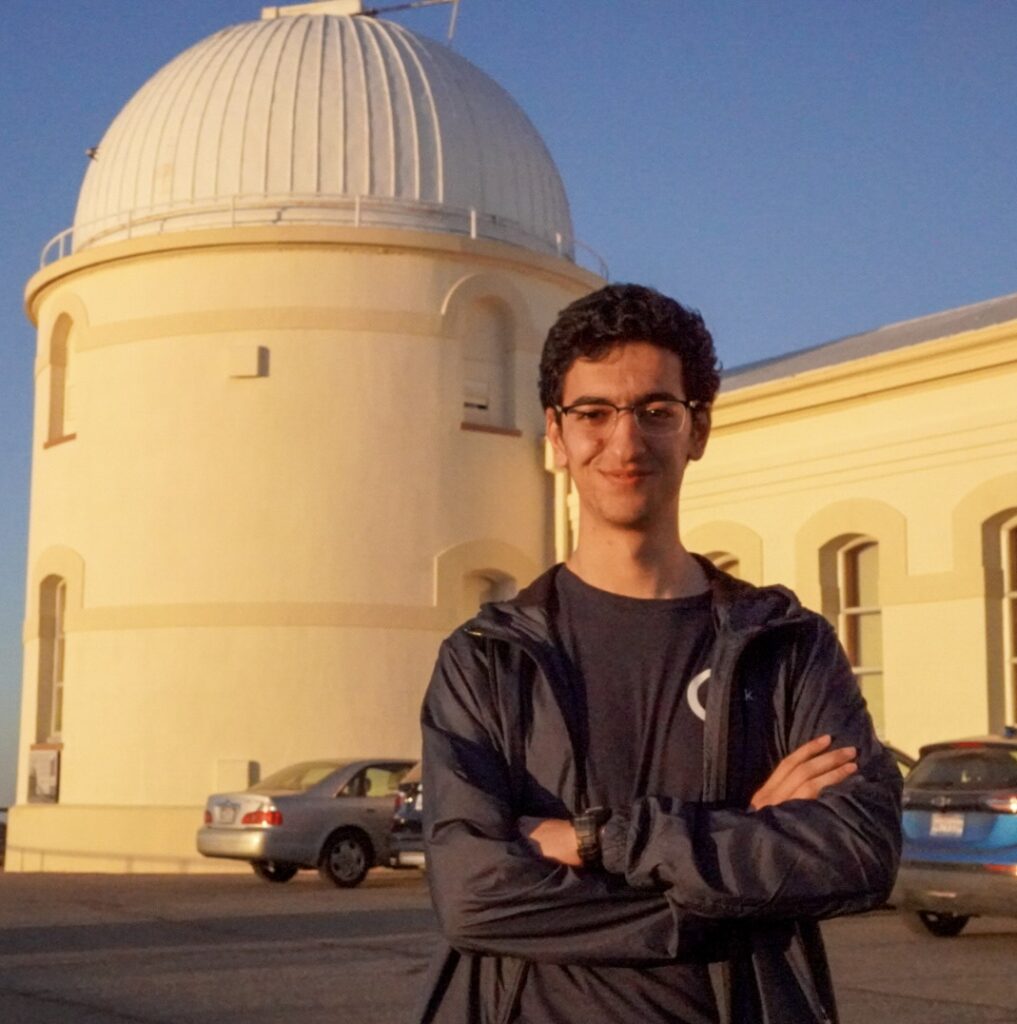
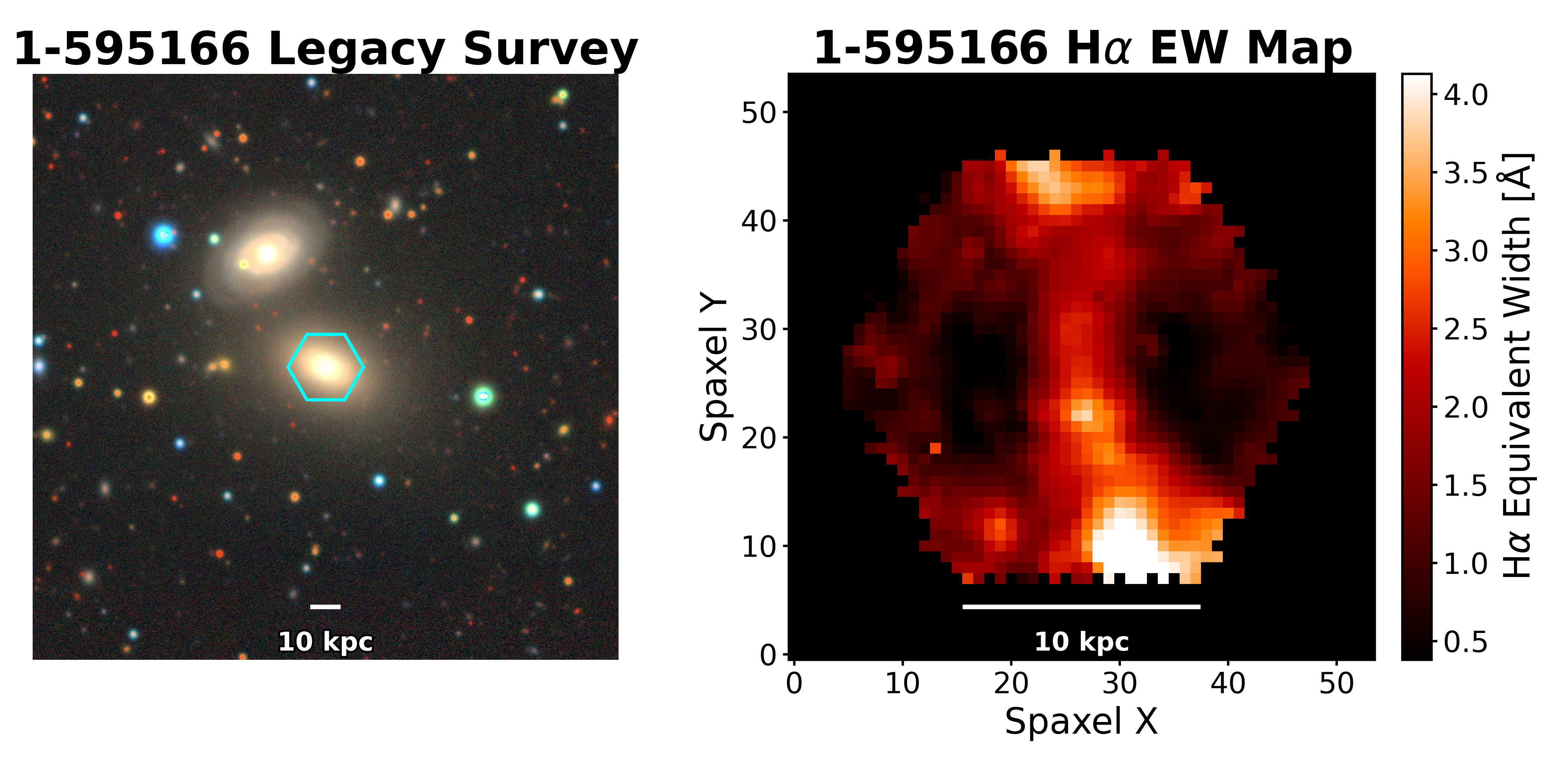
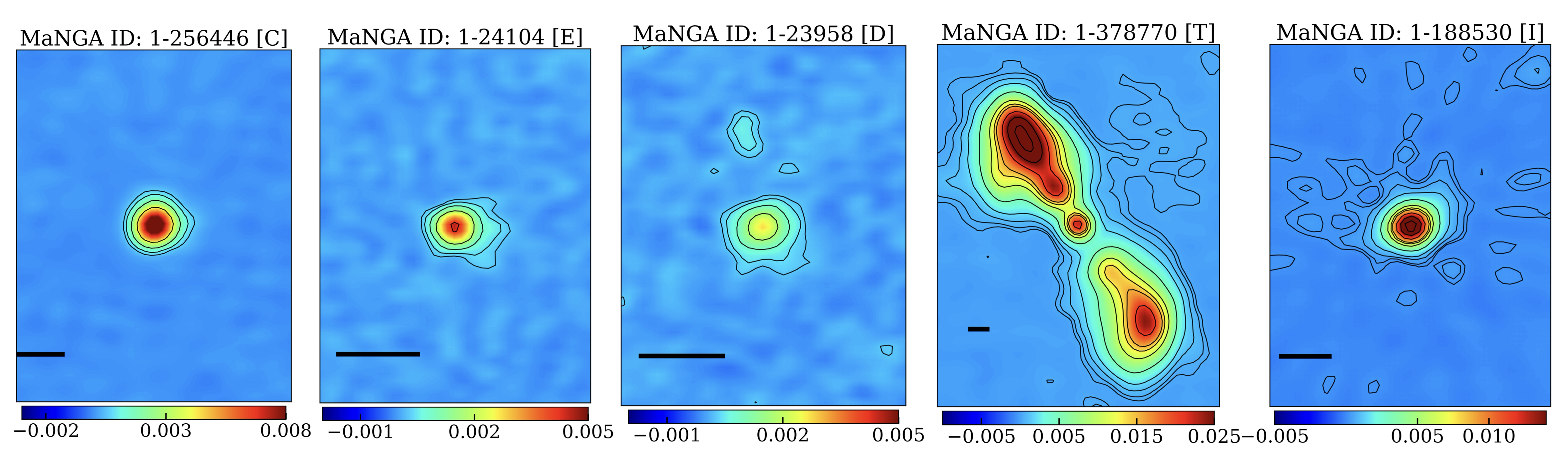
Arian Moghni Arian Moghni red geyser galaxy and H alpha equivalent-width map

Arian Moghni

Red geysers, gas flows, and AGN fueling

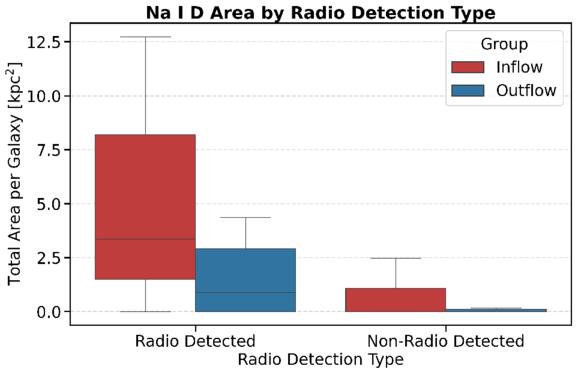
Arian studies how low-luminosity AGN hosts keep their black holes fed after star formation has mostly shut down. In his ApJ paper, he uses MaNGA spectroscopy of red geyser galaxies to connect outflowing ionized-gas structures with cool-gas inflow, showing that interactions can help deliver fuel to the central AGN while feedback leaves galaxy-scale signatures in the surrounding gas.

He is a fourth-year undergraduate student at the University of California, Santa Cruz, majoring in Astrophysics. He worked with me during Summer 2024 and continued his research in my group. He has published a first-author paper and is writing a second followup paper. He is currently applying for PhD positions.

Arian has been awarded the Barry Goldwater Scholarship, the Ron Ruby Scholarship, best-poster recognition at the UCSC APS presentation, and the best undergraduate research poster award at the APS Far West Section meeting for this research work. He was also invited to present this work at the 247th American Astronomical Society press conference.

Project highlight: Moghni, Roy et al. 2026 shows that red geysers provide a clean laboratory for catching both AGN fueling and feedback in action: cool gas falls in, ionized gas responds, and the host galaxy carries the fossil record of the exchange.
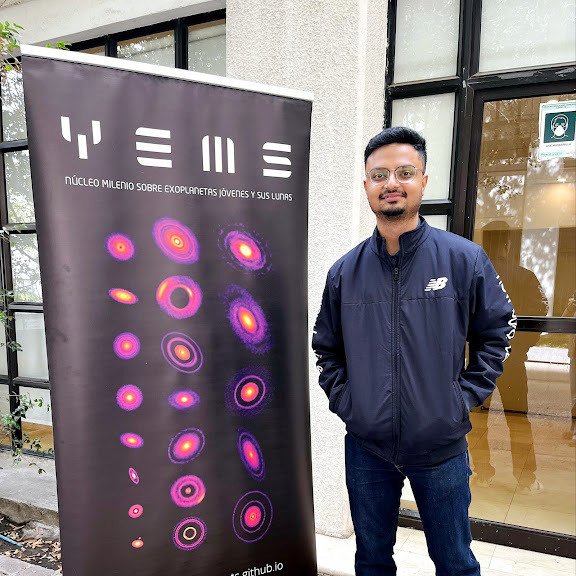
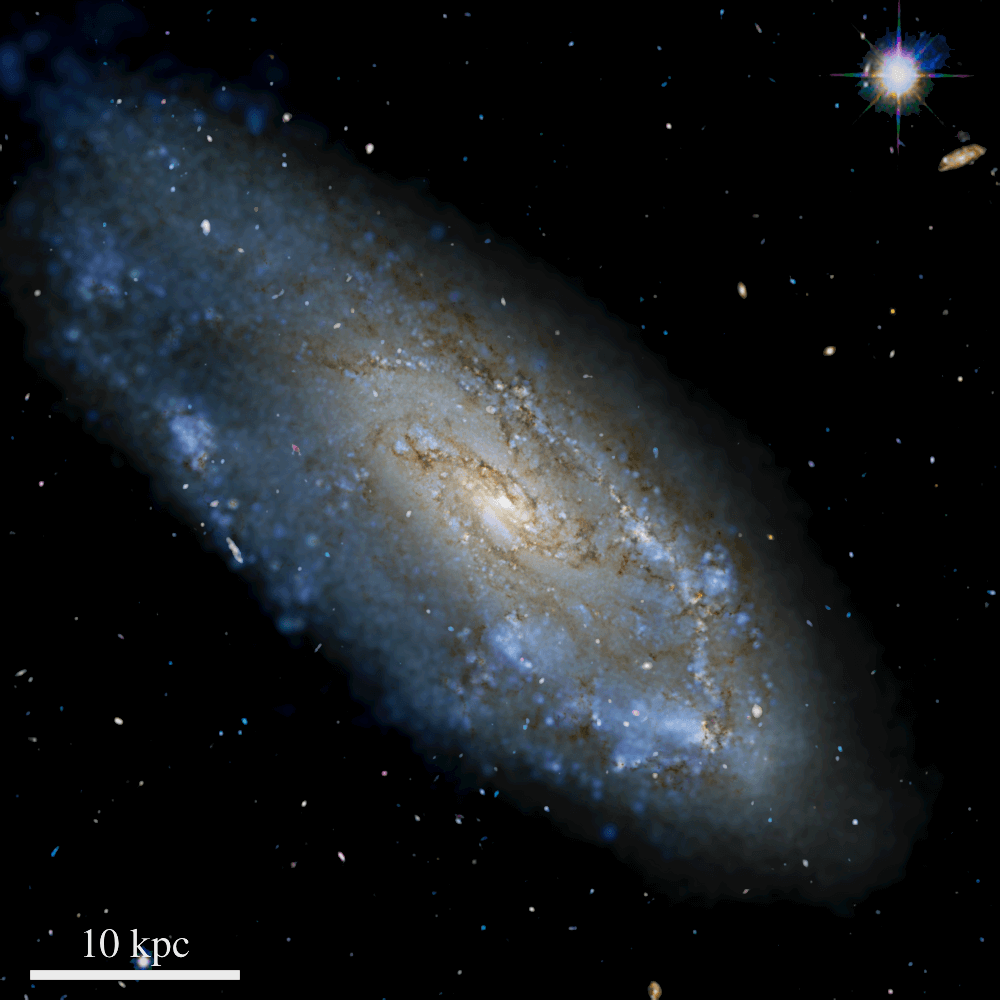
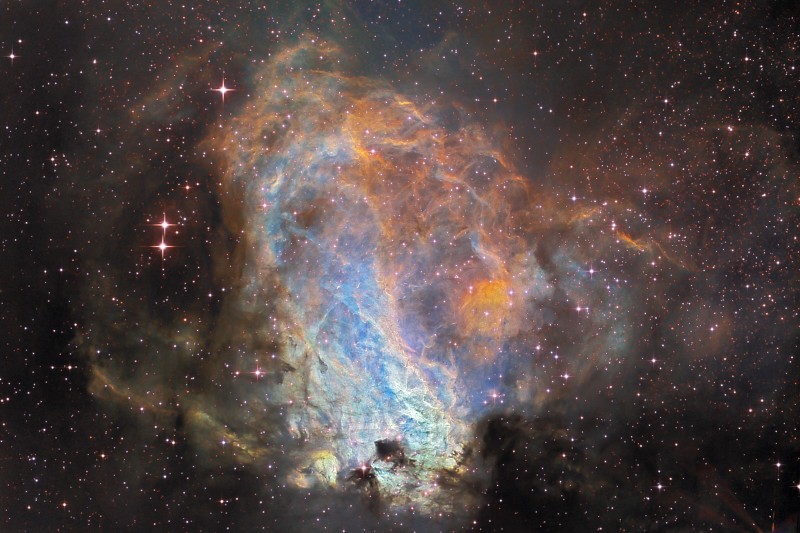
Anuroop Dasgupta Galaxy image for metallicity-gradient project

Anuroop Dasgupta

Metallicity gradients in low-mass galaxies

Anuroop studied how low-mass galaxies redistribute metals through feedback, gas flows, and star formation. Using 382 star-forming dwarf galaxies from MaNGA DR17, he measured gas-phase metallicity gradients and found that they are flat on average, consistent with efficient metal mixing in shallow gravitational potentials.

His work shows that residual metallicity-gradient trends are driven mainly by internal structure and gas velocity dispersion, not by large-scale environment. Anuroop worked with me for his Master's thesis and continued his research while being a PhD student at Universidad Diego Portales. For his PhD work, he has collaborated with researchers at UDP and ESO-Chile on planet formation, protoplanetary disk evolution, high-resolution imaging, interferometry, and ALMA, VLT, and JWST observations.

Anuroop received the ESO Studentship for 2025-2027, the Outstanding Paper Award at the 31st West Bengal State Science Congress, and the Paramesh Chandra Bhattacharya Memorial Award for best seminar in Physics at Presidency University.

Project highlight: Dasgupta, Roy et al. 2026 (under review in A& A) shows that internal galaxy structure and gas dynamics set the metal distribution in low-mass star-forming galaxies. This work is under review at Astronomy & Astrophysics.
Timothy Honablew

Timothy Honablew

Outflows in nearby Seyfert galaxies

Timothy is a Johns Hopkins University PhD student working on outflows in nearby Seyfert galaxies. He is jointly mentored by me and Prof. Timothy Heckman. His project uses spatially resolved spectroscopy using VLT/MUSE to connect ionized-gas kinematics, emission-line structure, and AGN-driven feedback in the local universe. He will eventually connect these observations with the James Webb Space Telesscope measurements of AGN-driven outflows at high-redshift to understand how AGN feedback evolves over cosmic time.

This work is part of a planned three-paper sequence on how modest-luminosity active nuclei move gas through their host galaxies. Timothy completed his doctoral candidacy examination in February 2026, and the first paper from this project is in preparation.

Project highlight: Nearby Seyferts provide a great site for measuring how AGN outflows couple to the surrounding interstellar medium on resolved galactic scales.
Atirath Dhara Kaela McConnell Jurij Waite

Science Internship Program Students

A redshift survey of galaxies and quasars behind Andromeda

Atirath Dhara, Kaela McConnell, and Jurij Waite worked with me through the UC Santa Cruz Science Internship Program on a redshift survey of compact galaxies and quasars behind M31. They used SPLASH spectra from Keck/DEIMOS to identify background sources through redshifted emission lines and spectral features such as Ca H+K absorption and intergalactic absorption.

This was a program targeted to provide high school students a real taste of research with real spectra, and multi-wavelength analysis. Their work was presented at the 2018 American Astronomical Society meeting.

Project highlight: Dhara, McConnell, Guhathakurta, Roy, and Waite 2018 identified and characterized galaxies and quasars behind Andromeda using redshifted spectral features in the SPLASH data set.

Have questions about my research or Astronomy in general? Feel free to Email Me

namrata@rri.res.in
Namrata Roy © 2026. All Right Reserved